

 Login
Login
 Home
Home 249 Lists
 676 Reviews
 Collections
Pixar Animation Studios appeared to have gone off the radar for a while having not released a film since Monsters University in summer 2013. Instead, they have been working on two new original projects for 2015, one of which being Inside Out. Being Pixar’s 15th feature and their 11th original story, Inside Out could be their strangest yet most fascinating picture to date. It embarks us on an adventure about aspects that are seen in practically every film (feelings), but within lays the manufacturing of those feelings and contending of how they can be controlled. In this respect, the concept of Inside Out is central to all Pixar characters and their complex phases of childhood, adolescence, parenthood, grief, identity and self-discovery. The film allows us to explore our own imaginations (which have always been Pixar’s speciality) within not so much a fictional world, but about life itself and how it is manifested through the actions we take through feelings. Inside Out may sound obscure on paper, especially for kids, but the on-screen execution elicits a both entertaining and educational value for all audiences alike.
Inside Out follows a very similar structure to many Disney films - characters develop, situation is perfect, something goes wrong and then the goal is to restore it (Frozen being a recent example). However, instead of it being that straightforward, Inside Out is a narrative parallel that combines both fantasy and reality in its connotations of the fantasy-adventure inside Riley’s mind and the family-drama regarding Riley’s life and her circumstances. The film’s co-director Pete Docter has demonstrated this before with Up in 2009, only this time providing us a story that, in many ways, holds a piece of every Pixar film. Everyone has feelings and Docter’s story helps us understand the basic yet most relatable concept of what could be inside the other characters’ minds as well as our own as viewers. For example, the functions inside Riley’s mind that concern her memories and emotions, such as the Islands of Personality and Memory Dump are easy to understand for all audiences. Also the fact that Riley’s memories, including her core ones and emotional reactions within her mind function through technology further elicits a more relatable standpoint towards contemporary viewers. Nevertheless, the complexities of how feelings are constructed are portrayed as an educational concept for kids to understand but the humane execution through these emotions is significant for adults to appreciate.
The film’s central tagline already states – “what if feelings have feelings?”, and Inside Out’s feelings are actually protagonists themselves but in a human form. All five central emotions are humanised and each represent a social identity - Joy as a maternal figure in her 30s, Disgust as an 18-25 year old woman, Fear as a teenage geek, Anger as a washed-up middle-aged man and Sadness as an aging pensioner. This is substantial to the majority of voice performers, notably Amy Poehler as Joy and Phyllis Smith as Sadness. In fact, these characters match their voice performers, or at least their star personae. They each play a significant role within Riley’s life and both their separation and connections convey how we as human beings maintain conscious thoughts and control the actions we take in life. Their collaboration and involvement in the narrative resembles other great Pixar groups including the toys (Toy Story), rats (Ratatouille), dogs (Up) and the sea underworld (Finding Nemo). 11-year-old Riley is also a protagonist on an equal level to the five central emotions. As we see the five feelings running inside Riley’s mind, it may allow viewers to imagine further of the thoughts within other Pixar children’s and exploring their horizons; i.e. Andy & Bonnie (Toy Story), Boo (Monsters Inc), Dash, Violet and Jack-Jack (The Incredibles), Russell (Up) and Merida (Brave). Emotions are central to an audience’s imagination, but Pixar exploring it through children, specifically Riley, reflects a genuine and sophisticated interpretation. Inside Out examines phases of childhood and adolescence only to interpret through these emotions that feelings are central to showing our true selves, and in her difficult circumstances, Riley shows her emotional downpour and her emotional strength as the narrative progresses. Interestingly, we get a glimpse of inside other characters’ minds, primarily Riley’s parents, and understand a child-friendly interpretation of adulthood. Within scenes that feature the parents’ minds, Pixar pays great attention to detail of adulthood and social identity from their own Anger, Disgust, Fear, Joy and Sadness, such as facial hair, lipstick and glasses that connect them to the actual individual. Interestingly, though, Inside Out does not feature an actual antagonist and because feelings and life situations are the story’s central premise, the obstacles of Riley’s new life in San Francisco is considered the villain.
Pixar’s Inside Out is a magnificent triumph in both its entertaining and educational values. It may be considered their most unorthodox picture to date as it does not entail a fantasy-adventure concept or have a strong emphasis on humour, but Inside Out is central to all Pixar films and one which, other than the obvious Easter Eggs or the mind-blowing Pixar Theory, connects them all together. 2015 is a very opportunistic year for Pixar with its two feature releases (Inside Out and The Good Dinosaur in November), but it is 20 years since the release of Toy Story. Inside Out touches upon many emotional, thematic elements, specifically in relation to life itself (like Toy Story and Pete Docter’s previous film Up). In summary, Inside Out is an extraordinary but heartfelt journey that returns to Pixar’s Golden Age once more and in its 20th year of feature filmmaking; it is a celebration of Pixar’s past achievements and is a significant reminder of what may be in store for the future.
Another masterful Pixar achievement.
 Posted : 10 years, 7 months ago on 4 August 2015 12:36
(A review of Inside Out)
Posted : 10 years, 7 months ago on 4 August 2015 12:36
(A review of Inside Out) 0 comments, Reply to this entry
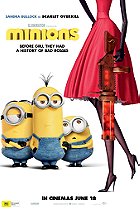
A fresh and fun spin-off prequel.
 Posted : 10 years, 7 months ago on 17 July 2015 02:39
(A review of Minions)
Posted : 10 years, 7 months ago on 17 July 2015 02:39
(A review of Minions)Out of all the most beloved supporting characters in children’s film franchises from Puss in Boots in Shrek to the Penguins in Madagascar, perhaps none deserve their own feature film quite like the Minions in Despicable Me. The beloved yellow, dungaree-wearing creatures played a huge part in those two films, mainly due to their humorous nature and unique appearances for children to enjoy, and they certainly do deserve a film about them. Although not an adaptation, Minions is set approximately fourty years before the events of Despicable Me which loosely uncovers their origins in a somewhat comical, parody-like effect. By following through traits of history and modern day life, the Minions go on a wild ride across the world and it is certainly a hilarious route along the way. Humour is the fuel behind the characters’ cultural status and that is what made Minions a successful spin-off, though the film does have its few problems.
As expected, the animation was splendid filled with rich imagery that enlightens the charming tone of the film. However, the film does not quite connect to the 3D conversion and unfortunately, it is because the imagery (as clear as it is) and camera shots do not convey to the breath-taking experience of three-dimensional cinema. In addition, the film perhaps did not have much to go onto, emotionally, as it was primarily the humour from the Minions and their figural expressions that would make it fun. In this sense, Minions did not provide as much warmth to the audience like the two Despicable Me films. The plot, of course, wasn’t going to be serious because the protagonists aren’t but there were some narrative elements in Minions that touched upon originality and uniqueness. For example, the evolution of Minions throughout moments of history, such as Ancient Egypt, was interesting because it allowed audiences to understand progression of fictional characters throughout our own history. The dialogue, particularly during scenes just featuring the Minions, was also hilarious as it often combined both their own witty language and often English.
In Despicable Me and its sequel, we know the Minions as a large group under Gru’s tenure but here in this spin-off, we are introduced to them as individuals. By following specifically Kevin, Stuart and Bob, the trio become joint protagonists in their adventures from the Antarctica to New York, Florida and London. Their path leads them across new characters including Scarlet Overkill, the main antagonist and voiced by Oscar winner Sandra Bullock, and a parodied version of Queen Elizabeth II. The film centralises the Minions as the central focus and exaggerates many cultural aspects, including the United Kingdom’s government, as the Minions being up to no good is who they are and what the audience want to see. It may be considered stupid but being a film about the witty and clumsy Minions, it delivers in the sense of satisfying adults and certainly children.
As the film begins, Minions serves as a spin-off to Despicable Me but as the narrative developed, the film ultimately becomes a direct prequel. The film provided hints in the trailer, such as (40 years B.G. (Before Gru)), and it was a friendly touch leading from Minions to the events of Despicable Me and their lives with Gru. Minions did not have to be made at all and it may not need any more installments (other than Despicable Me 3), but they deserved their own stand-alone film and it is a fresh, fun, and enlightening treat for audiences of all ages.
As expected, the animation was splendid filled with rich imagery that enlightens the charming tone of the film. However, the film does not quite connect to the 3D conversion and unfortunately, it is because the imagery (as clear as it is) and camera shots do not convey to the breath-taking experience of three-dimensional cinema. In addition, the film perhaps did not have much to go onto, emotionally, as it was primarily the humour from the Minions and their figural expressions that would make it fun. In this sense, Minions did not provide as much warmth to the audience like the two Despicable Me films. The plot, of course, wasn’t going to be serious because the protagonists aren’t but there were some narrative elements in Minions that touched upon originality and uniqueness. For example, the evolution of Minions throughout moments of history, such as Ancient Egypt, was interesting because it allowed audiences to understand progression of fictional characters throughout our own history. The dialogue, particularly during scenes just featuring the Minions, was also hilarious as it often combined both their own witty language and often English.
In Despicable Me and its sequel, we know the Minions as a large group under Gru’s tenure but here in this spin-off, we are introduced to them as individuals. By following specifically Kevin, Stuart and Bob, the trio become joint protagonists in their adventures from the Antarctica to New York, Florida and London. Their path leads them across new characters including Scarlet Overkill, the main antagonist and voiced by Oscar winner Sandra Bullock, and a parodied version of Queen Elizabeth II. The film centralises the Minions as the central focus and exaggerates many cultural aspects, including the United Kingdom’s government, as the Minions being up to no good is who they are and what the audience want to see. It may be considered stupid but being a film about the witty and clumsy Minions, it delivers in the sense of satisfying adults and certainly children.
As the film begins, Minions serves as a spin-off to Despicable Me but as the narrative developed, the film ultimately becomes a direct prequel. The film provided hints in the trailer, such as (40 years B.G. (Before Gru)), and it was a friendly touch leading from Minions to the events of Despicable Me and their lives with Gru. Minions did not have to be made at all and it may not need any more installments (other than Despicable Me 3), but they deserved their own stand-alone film and it is a fresh, fun, and enlightening treat for audiences of all ages.
0 comments, Reply to this entry
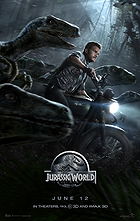
Has recycled elements but worth the 14 year wait.
 Posted : 10 years, 8 months ago on 14 June 2015 01:48
(A review of Jurassic World)
Posted : 10 years, 8 months ago on 14 June 2015 01:48
(A review of Jurassic World)If there is any film in contemporary cinema that has endured more production hell (other than The Hobbit trilogy) and release complications, it is the fourth instalment in the Jurassic Park franchise. Having waited since 2001 after Jurassic Park III for another dinosaur adventure, here we are fourteen years later with Jurassic World. The film had numerous chips on its shoulders not only for the long-awaited anticipation but how it will deliver on both in its narrative time setting and its technological advancements. Many audiences were dazzled by the visuals and the spectacular experience of the series before this one (though some could debate about Jurassic Park III) and although it has the odd few flaws, Jurassic World is, thankfully, a huge success and deserves the critical acclaim it is currently receiving.
Like Jurassic Park III, the great Steven Spielberg was not at the helm of directing Jurassic World. He had his own vision of Jurassic Park in the 1990s with the first two films, an era when he was at his prime for adventure films that required a high production scale. This time, however, he did not take charge (though he was executive producer) and instead came Colin Trevorrow, a filmmaker who has made Jurassic World only his second directed film. To an extent, like many rebooted franchises these days, may have needed a brand new cast, director, producer etc to present to a new generation a broader interpretation of the franchise’s narrative and visual scale whilst simultaneously reflecting on the past. In Jurassic World, the plot is identical in many ways to the original Jurassic Park in 1993 (which may have let it down a tad), but the technological advancement caught up with the visual potential of the series and Trevorrow gave us an insane thrill ride. Emotionally, it attained to many aspects of the original film, like the heroic protagonists, the imaginary experience of witnessing dinosaurs for kids, the glorifying extreme-wide shots (like of the park and of dinosaurs in the fields), and the intense and terrifying action scenes. Of course, on a visual scale Jurassic World delivers and it is undoubtedly has the greatest computer-generated effects in the series so far but also narratively, the film is very entertaining and redefines the experience of the 1993 instalment but could have been more original.
It may have been a considerable to challenge to even come close to replacing Sam Neill, Laura Dern, Jeff Goldblum and Julianne Moore as the franchise’s leading cast. These days, though, if there’s any leading star with an acting charisma to deliver at the highest level of adventure films, it would undoubtedly be Chris Pratt. His character does resemble Alan Grant in the original Jurassic Park with his standard leading male hero characteristics but Pratt certainly lead a cast that has massively rebooted the Jurassic Park series (and he would be a strong candidate for rebooting Indiana Jones, too). In addition, Bryce Dallas Howard has starred in various films over the years, usually with mixed or failed critical reception, but she shines in Jurassic World as Claire Dearing, the park’s operations manager, and she fits into a similar role as Laura Dern did in the original. Meanwhile, Jurassic World demonstrates the terrified but also dazzling experience of dinosaurs through the eyes of children, like the original. Ty Simpkins and Nick Robinson portray brothers Gray and Zach (who are Claire’s nephews) who recreate the original’s adventure for children of their age today.
In some ways, Jurassic World may be considered a remake of the original Jurassic Park than a sequel, mainly because the plot is very similar but with more technological advancements, but this fourth installment is set over 20 years after Jurassic Park and it does provide hints and references to it, but it is a stepping stone to rebooting the franchise. As previously stated, the plot could have been more adaptable away from its original roots but that didn’t stop the film’s enjoyment. Alongside successful rebooted franchises like Planet Of The Apes, Star Trek, Batman, X-Men and James Bond, Jurassic World is the start of recreating the beloved series for another generation and while maintaining the spectacular adventure of its past familiarities. It certainly was worth the fourteen year wait, there is bound to be a sequel to the series (hopefully to be even better) and its original director Steven Spielberg should be proud.
Like Jurassic Park III, the great Steven Spielberg was not at the helm of directing Jurassic World. He had his own vision of Jurassic Park in the 1990s with the first two films, an era when he was at his prime for adventure films that required a high production scale. This time, however, he did not take charge (though he was executive producer) and instead came Colin Trevorrow, a filmmaker who has made Jurassic World only his second directed film. To an extent, like many rebooted franchises these days, may have needed a brand new cast, director, producer etc to present to a new generation a broader interpretation of the franchise’s narrative and visual scale whilst simultaneously reflecting on the past. In Jurassic World, the plot is identical in many ways to the original Jurassic Park in 1993 (which may have let it down a tad), but the technological advancement caught up with the visual potential of the series and Trevorrow gave us an insane thrill ride. Emotionally, it attained to many aspects of the original film, like the heroic protagonists, the imaginary experience of witnessing dinosaurs for kids, the glorifying extreme-wide shots (like of the park and of dinosaurs in the fields), and the intense and terrifying action scenes. Of course, on a visual scale Jurassic World delivers and it is undoubtedly has the greatest computer-generated effects in the series so far but also narratively, the film is very entertaining and redefines the experience of the 1993 instalment but could have been more original.
It may have been a considerable to challenge to even come close to replacing Sam Neill, Laura Dern, Jeff Goldblum and Julianne Moore as the franchise’s leading cast. These days, though, if there’s any leading star with an acting charisma to deliver at the highest level of adventure films, it would undoubtedly be Chris Pratt. His character does resemble Alan Grant in the original Jurassic Park with his standard leading male hero characteristics but Pratt certainly lead a cast that has massively rebooted the Jurassic Park series (and he would be a strong candidate for rebooting Indiana Jones, too). In addition, Bryce Dallas Howard has starred in various films over the years, usually with mixed or failed critical reception, but she shines in Jurassic World as Claire Dearing, the park’s operations manager, and she fits into a similar role as Laura Dern did in the original. Meanwhile, Jurassic World demonstrates the terrified but also dazzling experience of dinosaurs through the eyes of children, like the original. Ty Simpkins and Nick Robinson portray brothers Gray and Zach (who are Claire’s nephews) who recreate the original’s adventure for children of their age today.
In some ways, Jurassic World may be considered a remake of the original Jurassic Park than a sequel, mainly because the plot is very similar but with more technological advancements, but this fourth installment is set over 20 years after Jurassic Park and it does provide hints and references to it, but it is a stepping stone to rebooting the franchise. As previously stated, the plot could have been more adaptable away from its original roots but that didn’t stop the film’s enjoyment. Alongside successful rebooted franchises like Planet Of The Apes, Star Trek, Batman, X-Men and James Bond, Jurassic World is the start of recreating the beloved series for another generation and while maintaining the spectacular adventure of its past familiarities. It certainly was worth the fourteen year wait, there is bound to be a sequel to the series (hopefully to be even better) and its original director Steven Spielberg should be proud.
0 comments, Reply to this entry
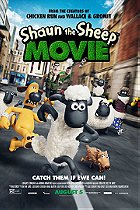
Very fun! Hats off to Aardman again.
 Posted : 11 years ago on 8 February 2015 01:30
(A review of Shaun the Sheep Movie)
Posted : 11 years ago on 8 February 2015 01:30
(A review of Shaun the Sheep Movie)Since originally being introduced as a supporting character in Wallace and Gromit: A Close Shave in 1995, Shaun the Sheep has had his own television series through which has instilled another legacy within the Aardman world. Shaun’s TV show served as more of a spin-off to Wallace & Gromit, and has since been a success. On the other side of things, mainstream cinema have released a variety of family-friendly spin-off features based on characters within popular franchises; examples - Puss In Boots, Planes, Penguins of Madagascar and the upcoming Minions. Shaun The Sheep Movie is a unique one, though, as it is in itself a spin-off so it is chopping off references from not only the TV series but capturing a relatable world from Wallace & Gromit where it all began. Shaun the Sheep Movie may be a very child-friendly film and is perhaps targeted more towards them than adults but the stop-motion is, as always, wonderful to watch and the story is fun.
Perhaps the most fascinating aspect of Aardman’s work was their breakthrough triumph of stop-motion animation. Beginning with Wallace & Gromit, Aardman produced an era of this extraordinary filmmaking technique. Shaun The Sheep Movie is definitely the clearest and most gorgeous, visually, of any film they have done so far. This is particularly how the film highlights British landscapes, through wide shots, tracking shots and close-ups of specific props. In that respect, Shaun The Sheep Movie is very much a depiction of British culture, like Wallace & Gromit and Chicken Run illustrate, too. However, without being too cynical towards a child-friendly film and comparing it too much to past Aardman films, the plot lacked creativity. Despite there were some recycled aspects like returning characters from Shaun’s spin-off series, it often appeared corny with clear plot holes. The humour was convincing, too, with the odd jokes aimed at a mixed audience, though its pre-school qualities make it funnier for kids. Still, this may sound too harsh considering that this film is more for children’s eyes but that being said from an adult’s perspective; Shaun The Sheep Movie should be a delight for them and, depending on sense of humour, for adults too.
In terms of characterization, Aardman’s idea of a Shaun the Sheep spin-off feature seemed rather bold. This is primarily because the characters are mute and it is mainly the physical actions of the characters and camerawork which must move the plot forward for children to understand. Quite frankly, it worked pretty well and in some ways, it was like the first contemporary children’s silent film. This is where a lot of previously stated humour was exhibited in a more slapstick manner than through dialogue, which is what kids like to see. As a more independent character in the film and his TV series, Shaun still feels the same sheep as from the series and in A Close Shave from 20 years ago. The return of other beloved characters from the TV show, including sheepdog Bitzer, the naughty pigs and the Farmer, enhance further warmth. The latter does resemble Wallace in some ways (perhaps related?), through love for animals, independent lifestyle yet their mutual clumsy and naïve personality. Similarly, the primary antagonist - the animal catcher is typical as it makes his actions of catching stray animals, what seem realistically right, become villainous. He actually resembles Victor in Curse Of The Were-Rabbit.
Shaun The Sheep Movie is a delightful hats off to its predecessors, though not chronologically, and it is a heartwarming film for the family. You don’t have to be an avid fan of Wallace and Gromit, Chicken Run or Aardman in general to enjoy this nor of the Shaun TV series. It has possesses many things that are friendly enough to be introduced to and enjoy - the story is simple to follow as are the characters. Nevertheless, despite being a successful TV series, Shaun the Sheep’s own feature film was perhaps irrelevant but it adds to the ranks of impressive spin-offs to past successful franchises and is another Aardman success.
Perhaps the most fascinating aspect of Aardman’s work was their breakthrough triumph of stop-motion animation. Beginning with Wallace & Gromit, Aardman produced an era of this extraordinary filmmaking technique. Shaun The Sheep Movie is definitely the clearest and most gorgeous, visually, of any film they have done so far. This is particularly how the film highlights British landscapes, through wide shots, tracking shots and close-ups of specific props. In that respect, Shaun The Sheep Movie is very much a depiction of British culture, like Wallace & Gromit and Chicken Run illustrate, too. However, without being too cynical towards a child-friendly film and comparing it too much to past Aardman films, the plot lacked creativity. Despite there were some recycled aspects like returning characters from Shaun’s spin-off series, it often appeared corny with clear plot holes. The humour was convincing, too, with the odd jokes aimed at a mixed audience, though its pre-school qualities make it funnier for kids. Still, this may sound too harsh considering that this film is more for children’s eyes but that being said from an adult’s perspective; Shaun The Sheep Movie should be a delight for them and, depending on sense of humour, for adults too.
In terms of characterization, Aardman’s idea of a Shaun the Sheep spin-off feature seemed rather bold. This is primarily because the characters are mute and it is mainly the physical actions of the characters and camerawork which must move the plot forward for children to understand. Quite frankly, it worked pretty well and in some ways, it was like the first contemporary children’s silent film. This is where a lot of previously stated humour was exhibited in a more slapstick manner than through dialogue, which is what kids like to see. As a more independent character in the film and his TV series, Shaun still feels the same sheep as from the series and in A Close Shave from 20 years ago. The return of other beloved characters from the TV show, including sheepdog Bitzer, the naughty pigs and the Farmer, enhance further warmth. The latter does resemble Wallace in some ways (perhaps related?), through love for animals, independent lifestyle yet their mutual clumsy and naïve personality. Similarly, the primary antagonist - the animal catcher is typical as it makes his actions of catching stray animals, what seem realistically right, become villainous. He actually resembles Victor in Curse Of The Were-Rabbit.
Shaun The Sheep Movie is a delightful hats off to its predecessors, though not chronologically, and it is a heartwarming film for the family. You don’t have to be an avid fan of Wallace and Gromit, Chicken Run or Aardman in general to enjoy this nor of the Shaun TV series. It has possesses many things that are friendly enough to be introduced to and enjoy - the story is simple to follow as are the characters. Nevertheless, despite being a successful TV series, Shaun the Sheep’s own feature film was perhaps irrelevant but it adds to the ranks of impressive spin-offs to past successful franchises and is another Aardman success.
0 comments, Reply to this entry
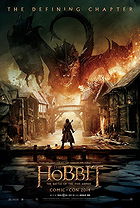
Decent finale but it's no Return Of The King.
 Posted : 11 years, 2 months ago on 30 December 2014 01:32
(A review of The Hobbit: The Battle of the Five Armies)
Posted : 11 years, 2 months ago on 30 December 2014 01:32
(A review of The Hobbit: The Battle of the Five Armies)The sad time has now come to bid our farewells to Middle-Earth. It’s been a long wait coming after the series’ pre-production hell before shooting commenced and its two predecessors’ release in 2012 and 2013, but the finale of the 300-page book has arrived. It may have perhaps been too long as Peter Jackson has stretched such a short book into three 2½ hour films to perhaps re-live our experience of Lord Of The Rings. However, The Battle Of The Five Armies is a totally different ball-game to Return Of The King, not just by quality of film and story but where it will leave off. In that respect, Battle Of The Five Armies has arguably had the most weight on its shoulders - to bridge between completing the Hobbit trilogy and introducing Lord Of The Rings. From where the film begins and judging from the title, it had action and excitement written all over it, perhaps being the most potential instalment of the series regarding entertainment only. Now, while The Battle Of The Five Armies was a fitting and satisfying finale but there were moments in the film that became disappointing and wasn’t entirely the masterful climax as anticipated.
Though The Hobbit films have been well-received at the box office, some could argue that it is the reason why the 300-page book has been stretched into three films. However, Jackson stated that more could be explored, including from the appendices, but the issue has been to re-create Lord Of The Rings when, despite being a predecessor and prequel, The Hobbit story is totally different. Anyway, Battle Of The Five Armies kicks off straight after Desolation Of Smaug and we get drawn right into the action. The pacing of the film was better than An Unexpected Journey, at least, but there were still moments in which it still appeared too stretched, such as (SPOILER ALERT) Thorin’s stubborn ‘madness’ and whether to help fight the Orcs. However, this wasn’t entirely a bad thing as it says in the title ‘Battle of the Five Armies’. It promised a lot of action and that’s what we got with great visuals, including Smaug and his fiery wrath on Lake-Town as well as the battle itself. Still, we got enough plots, some of which was a tad muddled and disorientated at times, particularly the Elf-Dwarf romance and Necromancer sequences. Still, The Hobbit book was too large a scale for one film and is perhaps too small for three 2 ½ films (would’ve fitted well at two films running approximately 120 minutes each), but The Battle Of The Five Armies has a slightly faster structure to round off the series.
As expected, it was great to see the ensemble cast return for one last time. Ian McKellen really does gel superbly as Gandalf the Grey and, perhaps more so than in An Unexpected Journey and Desolation Of Smaug, becomes the same one that we first saw in Fellowship Of The Ring. Similarly, Martin Freeman’s role as Bilbo was fantastic. He was literally the perfect actor for the role and in this film, he completes the adventure and thrills that elder Bilbo distinctly discussed in Fellowship Of The Ring. Richard Armitage’s bitter performance as Thorin Oakenshield establishes the anti-hero like critique of the character from the book, which worked well. However, despite all three stars gave great performances in their respective role the only issue was this: there didn’t seem to be one particular protagonist. It seemed like there were too many subplots and it often became uncertain as to who we should focus on more. Lord Of The Rings features separate storylines to achieve the same thing (Frodo, Sam and Gollum + Aragorn, Legolas, Gimli, Gandalf), but the difference is that The Hobbit characters are all together and the narrative centres on the group. That’s where it occasionally stretched the film a bit more. Needless to say, other supporting actors including Luke Evans, Lee Pace, Evangeline Lilly, Orlando Bloom and Benedict Cumberbatch all made solid re-appearances.
Though some may do it anyway, there is really no comparing The Battle Of The Five Armies to Return Of The King. Yes, both end a trilogy in Middle-Earth but the general plot and tonal delivery are both different, not to mention the latter ends it all whereas the formers ends to start a new beginning. It has taken a long time to finish the adaptation of a 300-page book and despite being a tad stretched, The Battle Of The Five Armies is a suitable, enjoyable and convincing enough finale to the trilogy. Peter Jackson, it’s been a wonderful ride for us, the audience, to embark into Middle-Earth with six films for approximately 1031 minutes and its unfortunate to see it go, but it will remain in our memories for eternity.
Though The Hobbit films have been well-received at the box office, some could argue that it is the reason why the 300-page book has been stretched into three films. However, Jackson stated that more could be explored, including from the appendices, but the issue has been to re-create Lord Of The Rings when, despite being a predecessor and prequel, The Hobbit story is totally different. Anyway, Battle Of The Five Armies kicks off straight after Desolation Of Smaug and we get drawn right into the action. The pacing of the film was better than An Unexpected Journey, at least, but there were still moments in which it still appeared too stretched, such as (SPOILER ALERT) Thorin’s stubborn ‘madness’ and whether to help fight the Orcs. However, this wasn’t entirely a bad thing as it says in the title ‘Battle of the Five Armies’. It promised a lot of action and that’s what we got with great visuals, including Smaug and his fiery wrath on Lake-Town as well as the battle itself. Still, we got enough plots, some of which was a tad muddled and disorientated at times, particularly the Elf-Dwarf romance and Necromancer sequences. Still, The Hobbit book was too large a scale for one film and is perhaps too small for three 2 ½ films (would’ve fitted well at two films running approximately 120 minutes each), but The Battle Of The Five Armies has a slightly faster structure to round off the series.
As expected, it was great to see the ensemble cast return for one last time. Ian McKellen really does gel superbly as Gandalf the Grey and, perhaps more so than in An Unexpected Journey and Desolation Of Smaug, becomes the same one that we first saw in Fellowship Of The Ring. Similarly, Martin Freeman’s role as Bilbo was fantastic. He was literally the perfect actor for the role and in this film, he completes the adventure and thrills that elder Bilbo distinctly discussed in Fellowship Of The Ring. Richard Armitage’s bitter performance as Thorin Oakenshield establishes the anti-hero like critique of the character from the book, which worked well. However, despite all three stars gave great performances in their respective role the only issue was this: there didn’t seem to be one particular protagonist. It seemed like there were too many subplots and it often became uncertain as to who we should focus on more. Lord Of The Rings features separate storylines to achieve the same thing (Frodo, Sam and Gollum + Aragorn, Legolas, Gimli, Gandalf), but the difference is that The Hobbit characters are all together and the narrative centres on the group. That’s where it occasionally stretched the film a bit more. Needless to say, other supporting actors including Luke Evans, Lee Pace, Evangeline Lilly, Orlando Bloom and Benedict Cumberbatch all made solid re-appearances.
Though some may do it anyway, there is really no comparing The Battle Of The Five Armies to Return Of The King. Yes, both end a trilogy in Middle-Earth but the general plot and tonal delivery are both different, not to mention the latter ends it all whereas the formers ends to start a new beginning. It has taken a long time to finish the adaptation of a 300-page book and despite being a tad stretched, The Battle Of The Five Armies is a suitable, enjoyable and convincing enough finale to the trilogy. Peter Jackson, it’s been a wonderful ride for us, the audience, to embark into Middle-Earth with six films for approximately 1031 minutes and its unfortunate to see it go, but it will remain in our memories for eternity.
0 comments, Reply to this entry
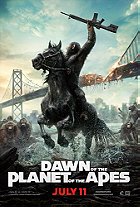
Superb sequel with the best CGI effects ever.
 Posted : 11 years, 6 months ago on 14 August 2014 03:45
(A review of Dawn of the Planet of the Apes)
Posted : 11 years, 6 months ago on 14 August 2014 03:45
(A review of Dawn of the Planet of the Apes)Although the original installment released in 1968 remains a classic, Planet Of The Apes as a franchise has been mixed due to its mediocre sequels and the 2001 remake. Those films portrayed an ape-dominated world as more like science-fiction adventures than displaying humans and apes as a family with a joint ancestral history. This is where Rise Of The Planet Of The Apes succeeded because it captured the heart and more realistic tone, including the visual effects, of humanity’s resemblance to apes. It also had a more original touch to it as Hollywood filmed it from more a scientific angle with more depth. Thankfully, its sequel Dawn Of The Planet Of The Apes is a triumph and it could be one of the few follow-ups these days to have outshined the predecessor. The reason for Dawn’s superiority above Rise is due to the story examining further between what constitutes being human and being ape through themes as well as enhancing character study. Still, Dawn continues this tremendous rebooted franchise with more drama and adventure than before.
The majority of mainstream Hollywood films are about the computer-generated effects. They have been utilized to enhance the visual cinematic experience through genres of either especially action or fantasy/science-fiction, but rarely do we see effects primarily centred for drama. Although we got action scenes in Dawn Of The Planet Of The Apes, the film’s CGI and motion-capture is arguably the greatest and most realistic ever produced onto the screen. Only the art of performance capture could have worked when performing as apes because the film’s message compares and contrasts their connection with humanity. The fact we do not see the actors as these apes on-screen illustrates how they differ themselves from humans yet at the same time, the performer’s actions establish that connection further. In terms of the actual effects, the attention to detail was unbelievable which on occasions appeared as clear as high-definition at a higher frame rate. To illustrate this, director Matt Reeves numerously used close-ups and extreme close-ups. These shots become effective in showing character development and the significance became vital when expressing them. Still, if there is a film to show you how CGI is done properly, Dawn Of The Planet Of The Apes will fill you in.
The film is set ten years after the events of Rise Of The Planet Of The Apes and besides the leading ape Caesar, wonderfully portrayed via motion-capture by Andy Serkis, we see a new ensemble cast. In place of James Franco, Jason Clarke portrays Malcolm who is a genuine family man and the leader of a small group of humans within ape territory. Clarke’s character is roughly the same as Franco’s in Rise but his relationship with Caesar is heartfelt and engaging. Keri Russell and Kodi-Smit McPhee portray Malcolm’s girlfriend and young son. This is where Dawn, to a degree, resembles itself to Jurassic Park - a small group with a family wandering into a whole new wilderness on Earth. Gary Oldman has been an actor of many talents and portrayed a number of heroes and villains throughout his career, but his role as Dreyfus is an interesting one because he is, in fact, neither of them. He hates the apes for making him lose his family and he wants what’s best for his species, like Caesar does, but he comes across as a villain. So, Oldman’s performance was solid, too. However, the obvious stand-out performer is Andy Serkis who absolutely masterfully portrayed Caesar through motion-capture, a style of acting that he is best known for. From Gollum to Kong and now to Caesar, Serkis has illustrated that even through CGI, we can experience raw human emotions and it goes to show that acting is not about facial expression and body language is equally important. The rest of the motion-capture performances were by unknown actors and there were certain characters that stood out which include Koba, Blue Eyes, Maurice, Rocket and Ash. Still, Serkis was the right guy to lead the other cast of motion capture roles.
Dawn Of The Planet Of The Apes follows in the footsteps of great sequels that surpass the predecessor. Like Rise, Dawn does not necessarily serve as a direct prequel to the 1968 classic but tells tales of joint domination on Earth between mankind and apes on a more emotional, realistic scale. For perhaps the first time in the franchise, Dawn also constitutes what makes one human and one ape and actually teaches viewers with lessons about how both species are different whilst simultaneously reflecting similarities. Nevertheless, it is a superb sequel that is more engaging, both visually and emotionally, and leaves the viewers with more excitement for a third installment.
The majority of mainstream Hollywood films are about the computer-generated effects. They have been utilized to enhance the visual cinematic experience through genres of either especially action or fantasy/science-fiction, but rarely do we see effects primarily centred for drama. Although we got action scenes in Dawn Of The Planet Of The Apes, the film’s CGI and motion-capture is arguably the greatest and most realistic ever produced onto the screen. Only the art of performance capture could have worked when performing as apes because the film’s message compares and contrasts their connection with humanity. The fact we do not see the actors as these apes on-screen illustrates how they differ themselves from humans yet at the same time, the performer’s actions establish that connection further. In terms of the actual effects, the attention to detail was unbelievable which on occasions appeared as clear as high-definition at a higher frame rate. To illustrate this, director Matt Reeves numerously used close-ups and extreme close-ups. These shots become effective in showing character development and the significance became vital when expressing them. Still, if there is a film to show you how CGI is done properly, Dawn Of The Planet Of The Apes will fill you in.
The film is set ten years after the events of Rise Of The Planet Of The Apes and besides the leading ape Caesar, wonderfully portrayed via motion-capture by Andy Serkis, we see a new ensemble cast. In place of James Franco, Jason Clarke portrays Malcolm who is a genuine family man and the leader of a small group of humans within ape territory. Clarke’s character is roughly the same as Franco’s in Rise but his relationship with Caesar is heartfelt and engaging. Keri Russell and Kodi-Smit McPhee portray Malcolm’s girlfriend and young son. This is where Dawn, to a degree, resembles itself to Jurassic Park - a small group with a family wandering into a whole new wilderness on Earth. Gary Oldman has been an actor of many talents and portrayed a number of heroes and villains throughout his career, but his role as Dreyfus is an interesting one because he is, in fact, neither of them. He hates the apes for making him lose his family and he wants what’s best for his species, like Caesar does, but he comes across as a villain. So, Oldman’s performance was solid, too. However, the obvious stand-out performer is Andy Serkis who absolutely masterfully portrayed Caesar through motion-capture, a style of acting that he is best known for. From Gollum to Kong and now to Caesar, Serkis has illustrated that even through CGI, we can experience raw human emotions and it goes to show that acting is not about facial expression and body language is equally important. The rest of the motion-capture performances were by unknown actors and there were certain characters that stood out which include Koba, Blue Eyes, Maurice, Rocket and Ash. Still, Serkis was the right guy to lead the other cast of motion capture roles.
Dawn Of The Planet Of The Apes follows in the footsteps of great sequels that surpass the predecessor. Like Rise, Dawn does not necessarily serve as a direct prequel to the 1968 classic but tells tales of joint domination on Earth between mankind and apes on a more emotional, realistic scale. For perhaps the first time in the franchise, Dawn also constitutes what makes one human and one ape and actually teaches viewers with lessons about how both species are different whilst simultaneously reflecting similarities. Nevertheless, it is a superb sequel that is more engaging, both visually and emotionally, and leaves the viewers with more excitement for a third installment.
0 comments, Reply to this entry
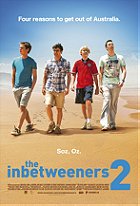
A hilariously fun sequel on par with predecessor.
 Posted : 11 years, 6 months ago on 7 August 2014 12:15
(A review of The Inbetweeners 2)
Posted : 11 years, 6 months ago on 7 August 2014 12:15
(A review of The Inbetweeners 2)Despite average expectations and uncertainty of living up to the series, The Inbetweeners Movie in 2011 had met with positive reception and it seemed like it would be the end of the road for the four lads. However, The Inbetweeners 2 sees our favourite British youngsters return, probably for their final time, in another of their abroad adventures with sun, sand, sea, booze, sex and women awaiting them. The reason for the series and first film’s success has been due to its connection with its target audience - teenagers within the British culture, whilst simultaneously being full of laughs for adults. The Inbetweeners 2 seemed like a financial project by using its past success as enticement but it proved itself as another success in the series as it delivers exactly what you would expect. It may be slowly suffering from repetition but the humour in The Inbetweeners still has not degraded and becomes a fun sequel and possibly finale.
Due to being made for cinema rather than television, The Inbetweeners 2 was filmed differently in comparison to the series. Like the first film, it has a variety of shots that enhanced creativity within the franchise and to British cinema. The most interesting is Beesley and Morris’ use of montage shots which together create meaning by the fact one follows another. The four lads are out in Australia for the same reason and experience the same adventure but it is from four different perspectives. Co-creators and writers of the show and films, Damon Beesley and Iain Morris replace Ben Palmer as The Inbetweeners 2 director. Both individually and as a pair, Beesley and Morris made their directorial debuts and went off to a solid start by delivering the same moments of laughter that were so great in the series and also expressing something different, filming wise. Their work has now reached its peak and at this rate, it needs no further instalments.
Teenagers, particularly male, are usually structured into certain character types that are different from each other yet inner connections keep them together. Will, Simon, Jay and Neil are all four totally different lads but their mutual resemblances of disaster, unpopularity and behaviour in a social atmosphere makes them more interesting. It actually allows audiences to explore teenagers in this current age at a wider scale. Now, we have seen grown men portray teenagers on numerous occasions, such as American Pie, but the four Inbetweeners exemplify almost exactly how male teenagers behave from 16-19 years old, though some could argue it’s an exaggeration. Simon Bird, James Buckley, Blake Harrison and Joe Thomas all return to their respective roles and once again, deliver great performances without losing character grasp. Bird’s role as Will McKenzie is an exact definition of a teenage geek wanting to become a man but his stubbornness of his surroundings and thoughts draw him back a few steps. Thomas once again delivers as Simon Cooper who is perhaps the most vulnerable of the four which sends him into all sorts of trouble. Blake Harrison shines as Neil Sutherland (this reviewer’s favourite Inbetweener) with a simple-minded performance. In fact, it is usually Neil’s simple yet somewhat awkward attitude which causes many of the controversies surrounding the boys. And last but not least, James Buckley is still impressive as Jay Cartwright, the one inbetweener who seems the most masculine by his constant talks about sexuality and being a lecturer for the others. In one way or another, we can relate characteristics of these lads to teenagers around us and that is why the show and films are so successful. Minus the four leading stars, we see newbies including Emily Berrington and Freddie Stroma as well as those returning such as Tamla Kari, Lydia Rose Bewley, Greg Davies, David Schaal and Belinda Stewart-Wilson.
Judging from how the first film concluded, The Inbetweeners 2 was not entirely necessary. It may have gone down the same repetitive, lazy path as The Hangover films but it really does not do that and adapts the same adventure types into different circumstances. The humour type is still the same and it still manages to please its viewers and maintain its success; however, over time it may become too much and lose its relevance as they just survived with this one. Thus, despite this sequel is another triumph, it may be safe to say that The Inbetweeners 2 should be their last adventure as both a film duology and a TV series.
Due to being made for cinema rather than television, The Inbetweeners 2 was filmed differently in comparison to the series. Like the first film, it has a variety of shots that enhanced creativity within the franchise and to British cinema. The most interesting is Beesley and Morris’ use of montage shots which together create meaning by the fact one follows another. The four lads are out in Australia for the same reason and experience the same adventure but it is from four different perspectives. Co-creators and writers of the show and films, Damon Beesley and Iain Morris replace Ben Palmer as The Inbetweeners 2 director. Both individually and as a pair, Beesley and Morris made their directorial debuts and went off to a solid start by delivering the same moments of laughter that were so great in the series and also expressing something different, filming wise. Their work has now reached its peak and at this rate, it needs no further instalments.
Teenagers, particularly male, are usually structured into certain character types that are different from each other yet inner connections keep them together. Will, Simon, Jay and Neil are all four totally different lads but their mutual resemblances of disaster, unpopularity and behaviour in a social atmosphere makes them more interesting. It actually allows audiences to explore teenagers in this current age at a wider scale. Now, we have seen grown men portray teenagers on numerous occasions, such as American Pie, but the four Inbetweeners exemplify almost exactly how male teenagers behave from 16-19 years old, though some could argue it’s an exaggeration. Simon Bird, James Buckley, Blake Harrison and Joe Thomas all return to their respective roles and once again, deliver great performances without losing character grasp. Bird’s role as Will McKenzie is an exact definition of a teenage geek wanting to become a man but his stubbornness of his surroundings and thoughts draw him back a few steps. Thomas once again delivers as Simon Cooper who is perhaps the most vulnerable of the four which sends him into all sorts of trouble. Blake Harrison shines as Neil Sutherland (this reviewer’s favourite Inbetweener) with a simple-minded performance. In fact, it is usually Neil’s simple yet somewhat awkward attitude which causes many of the controversies surrounding the boys. And last but not least, James Buckley is still impressive as Jay Cartwright, the one inbetweener who seems the most masculine by his constant talks about sexuality and being a lecturer for the others. In one way or another, we can relate characteristics of these lads to teenagers around us and that is why the show and films are so successful. Minus the four leading stars, we see newbies including Emily Berrington and Freddie Stroma as well as those returning such as Tamla Kari, Lydia Rose Bewley, Greg Davies, David Schaal and Belinda Stewart-Wilson.
Judging from how the first film concluded, The Inbetweeners 2 was not entirely necessary. It may have gone down the same repetitive, lazy path as The Hangover films but it really does not do that and adapts the same adventure types into different circumstances. The humour type is still the same and it still manages to please its viewers and maintain its success; however, over time it may become too much and lose its relevance as they just survived with this one. Thus, despite this sequel is another triumph, it may be safe to say that The Inbetweeners 2 should be their last adventure as both a film duology and a TV series.
0 comments, Reply to this entry
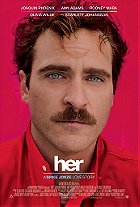
Film Of The Decade So Far.
 Posted : 11 years, 7 months ago on 6 August 2014 02:03
(A review of Her)
Posted : 11 years, 7 months ago on 6 August 2014 02:03
(A review of Her)Anyone who has seen past feature films from Spike Jonze, such as Being John Malkovich and Adaptation, will notice that he is an unorthodox filmmaker with an auteurist style of expressing human fundamentals within usually a science-fiction, imaginative world. His latest science-fiction drama Her examines the true emotional, physical constitutions of humanity and it communicates with the audience at an intense rate with emotions flying everywhere. Not in a long time has there been a film with such emotional complexity that it doesn’t constitute a certain mood. Her also beautifully explores humanity’s current connection with technology and creates an argument as to whether it represents the future or is another sci-fi. Nevertheless, Her is a ground-breaker that easily makes it Spike Jonze’s best to date and one of the most wonderful and original films of the decade.
Besides the unorthodox story, Her distances itself from traditional Hollywood seen these days. Spike Jonze’s independent approach to not only his original script but to direction establishes Her as a film of narrative complexity. It is simple to describe the plot – a lonely man becomes romantically involved with his operating system, but on an emotional level, it is a whole lot more complicating and challenges that relationship in a variety of ways. It may seem odd on paper but technology is a vital part of our lives today and Theodore exemplifies that connection, even to go as far as fall in love with it. Jonze’s incredible script sends the audience into a maze of emotions with the bond between human and operating system slotting in moments of warmth, giggles, confusion, guilt and heartbreak. This is due to the complexity of the relationship being that of a normal human relationship yet one of the two is not even human. There’s even a lot of talk about wanting to be human which Jonze brilliantly, especially in the form of Scarlett Johansson, leaves us to imagine Samantha’s physical form for ourselves.
On that note, Her is also a wonderful visual spectacle. The cinematography by Hoyte Van Hoytema is shot in a colourful tone that balances Los Angeles and it being in a science-fiction like world. It is particularly the use of various colours in medium and wide shots that exemplify this and illustrate a certain character’s mood. For example, the film’s recurring use of the colour red symbolises romance and love, which is noticed usually on the computing system, Theodore’s shirt or the filled lighting. Besides the colour red, Van Hoytema and Jonze utilize other glistening colouring within landscape shots and in medium shots that generate this unique world from Theodore’s perspective and to balance it between science-fiction setting and future Los Angeles. Nevertheless, Jonze’s direction and Van Hoytema’s cinematography is spectacular but it is underrated and deserved further recognition at the Oscars.
It has been a very wise and positive decision for Joaquin Phoenix to return to acting. After his memorable performance in The Master, he stars in what is quite possibly his most unique yet emotionally ground-breaking role to date as Theodore Twombly. He is one of those leading characters who have so much about him that he doesn’t know what direction he is heading into. His success as a city writer exemplifies signs of creativity and intelligence yet the contents of his work is about romance and relationships, which in this film is difficult for Theodore to maintain. Phoenix’s performance is an abundance of sentiments and that is difficult to sustain when playing a character. At times, his acting was funny, it was warm, it was difficult to interpret and it was heart-breaking, which is exactly how Jonze wrote and directed this character. Phoenix was unlucky to have not received an Oscar nomination but now that his return to acting is up and running, he may have his chance next time.
Alongside Joaquin Phoenix, we see a variety of female supporting characters who each give solid performances. Scarlett Johansson provides the voice of operating system Samantha. Her role is unique because she is perhaps the most human character in the film yet we only hear her voice and also, out of the other women we see in the film, Samantha could be the most sexually attractive character yet we do not see her on-screen. We only have to picture her for ourselves, hence why one particular sex scene between Samantha and Theodore is shot in complete darkness. Her relationship with Theodore is so strong that she seems to illustrate real human feelings whilst throughout the film, arguing to herself that they could still be operated. The audience become involved in their bond and at times, we seem to forget that she is a computer. So we become part of inside Theodore’s mind, perhaps like Craig and Lotte in Being John Malkovich. Scarlett Johansson has not been so engaging in a role until Samantha in Her and like Phoenix, she should have received an Oscar nomination for her performance and has become influential to the idea that acting is not entirely about figural expressions. Meanwhile, Amy Adams and Rooney Mara make good appearances in the other two women in Theodore’s life, both of whom are human – Catherine (Mara) is his ex-wife and Amy (Adams) as his close friend. Together, this ensemble cast reflect the uniqueness of Jonze’s script and direction to create something extraordinary, heartfelt and thought-provoking.
Her is truly one of a kind. Its unique and simple idea on paper of a human-computer relationship embarks you into a gripping emotional ride for two hours. It convincingly portrays humanity’s relationship with technology and how it affects our minds. In fact, the film is complex in itself with genre as to whether it is a science-fiction story inside someone’s mind or if this could be our future in years to come. That is how a film truly should conclude – to make its audience think and reflect on things, whether in the past, present or future. Her certainly does argue this conspiracy and it still could be possible with technology developing. Nevertheless as a film, Her is a genuine, compelling and emotionally powerful masterpiece that could very well be the greatest of 2013 and a strong contender for the best film of the 2010s.
Besides the unorthodox story, Her distances itself from traditional Hollywood seen these days. Spike Jonze’s independent approach to not only his original script but to direction establishes Her as a film of narrative complexity. It is simple to describe the plot – a lonely man becomes romantically involved with his operating system, but on an emotional level, it is a whole lot more complicating and challenges that relationship in a variety of ways. It may seem odd on paper but technology is a vital part of our lives today and Theodore exemplifies that connection, even to go as far as fall in love with it. Jonze’s incredible script sends the audience into a maze of emotions with the bond between human and operating system slotting in moments of warmth, giggles, confusion, guilt and heartbreak. This is due to the complexity of the relationship being that of a normal human relationship yet one of the two is not even human. There’s even a lot of talk about wanting to be human which Jonze brilliantly, especially in the form of Scarlett Johansson, leaves us to imagine Samantha’s physical form for ourselves.
On that note, Her is also a wonderful visual spectacle. The cinematography by Hoyte Van Hoytema is shot in a colourful tone that balances Los Angeles and it being in a science-fiction like world. It is particularly the use of various colours in medium and wide shots that exemplify this and illustrate a certain character’s mood. For example, the film’s recurring use of the colour red symbolises romance and love, which is noticed usually on the computing system, Theodore’s shirt or the filled lighting. Besides the colour red, Van Hoytema and Jonze utilize other glistening colouring within landscape shots and in medium shots that generate this unique world from Theodore’s perspective and to balance it between science-fiction setting and future Los Angeles. Nevertheless, Jonze’s direction and Van Hoytema’s cinematography is spectacular but it is underrated and deserved further recognition at the Oscars.
It has been a very wise and positive decision for Joaquin Phoenix to return to acting. After his memorable performance in The Master, he stars in what is quite possibly his most unique yet emotionally ground-breaking role to date as Theodore Twombly. He is one of those leading characters who have so much about him that he doesn’t know what direction he is heading into. His success as a city writer exemplifies signs of creativity and intelligence yet the contents of his work is about romance and relationships, which in this film is difficult for Theodore to maintain. Phoenix’s performance is an abundance of sentiments and that is difficult to sustain when playing a character. At times, his acting was funny, it was warm, it was difficult to interpret and it was heart-breaking, which is exactly how Jonze wrote and directed this character. Phoenix was unlucky to have not received an Oscar nomination but now that his return to acting is up and running, he may have his chance next time.
Alongside Joaquin Phoenix, we see a variety of female supporting characters who each give solid performances. Scarlett Johansson provides the voice of operating system Samantha. Her role is unique because she is perhaps the most human character in the film yet we only hear her voice and also, out of the other women we see in the film, Samantha could be the most sexually attractive character yet we do not see her on-screen. We only have to picture her for ourselves, hence why one particular sex scene between Samantha and Theodore is shot in complete darkness. Her relationship with Theodore is so strong that she seems to illustrate real human feelings whilst throughout the film, arguing to herself that they could still be operated. The audience become involved in their bond and at times, we seem to forget that she is a computer. So we become part of inside Theodore’s mind, perhaps like Craig and Lotte in Being John Malkovich. Scarlett Johansson has not been so engaging in a role until Samantha in Her and like Phoenix, she should have received an Oscar nomination for her performance and has become influential to the idea that acting is not entirely about figural expressions. Meanwhile, Amy Adams and Rooney Mara make good appearances in the other two women in Theodore’s life, both of whom are human – Catherine (Mara) is his ex-wife and Amy (Adams) as his close friend. Together, this ensemble cast reflect the uniqueness of Jonze’s script and direction to create something extraordinary, heartfelt and thought-provoking.
Her is truly one of a kind. Its unique and simple idea on paper of a human-computer relationship embarks you into a gripping emotional ride for two hours. It convincingly portrays humanity’s relationship with technology and how it affects our minds. In fact, the film is complex in itself with genre as to whether it is a science-fiction story inside someone’s mind or if this could be our future in years to come. That is how a film truly should conclude – to make its audience think and reflect on things, whether in the past, present or future. Her certainly does argue this conspiracy and it still could be possible with technology developing. Nevertheless as a film, Her is a genuine, compelling and emotionally powerful masterpiece that could very well be the greatest of 2013 and a strong contender for the best film of the 2010s.
0 comments, Reply to this entry
Totally unnecessary that should stay a TV series.
 Posted : 11 years, 7 months ago on 7 July 2014 07:37
(A review of Mrs. Brown's Boys D'Movie)
Posted : 11 years, 7 months ago on 7 July 2014 07:37
(A review of Mrs. Brown's Boys D'Movie)Since series one aired in 2011, the television show of Mrs Brown’s Boys has been heavily panned by critics. This has been due to the general idea of a man dressing as a foul-mouthed elderly Irish lady and has been known as “the worst comedy ever made”. However despite the negative criticism, it has had an extraordinarily high viewership across the UK with millions per episode. So, it has been a success financially rather than critically and the idea of adapting the series into a film was rather mixed. Following in similar footsteps to The Inbetweeners Movie in 2011 after that franchise’s success, the film would gain a wider audience outside of its original broadcasting source but would also risk overkill and simply come across as a money-grubbing project. As a fan of the show, expectations of the film were mixed and that is exactly what it became. It still featured the same style of comedy from the series but felt too forced, lacked momentum in traditional situation comedy and the plot was weak. Therefore, Mrs Brown’s Boys D’Movie was rather unnecessary in general but neither was it entirely as awful as expected.
Even as a situation-comedy, the television series of Mrs Brown’s Boys was never anything to take seriously. In fact, its financial success is fighting back against the critics. Production on the feature film was never going to be a spectacle but even at a 3.6 million budget, it did decently. The series was filmed and set entirely in a live-audience studio and the film perhaps added a little more freedom and in terms of tone and filming, it was a delight to watch. Furthermore the fact that it utilises drama and truthful moralities about family and friends adds a sense of sophistication in light of the immature, forced humour. Still, it is in the plot that was the Achilles heel, particularly the use of disability and racial stereotypes in which it becomes a parody of society. It is totally unrealistic and is simply a more forced and cornier episode that has been extended.
Some of the most notable comedies in Hollywood have featured men dressing as women, such as Some Like It Hot, Tootsie and Mrs Doubtfire. In its own way, Mrs Brown’s Boys D’Movie parodies the idea whilst at the same time, attempts to be a serious within itself and the plot. A ridiculous story and a ridiculous character simply connect. As well as being the creator and screenwriter of the series, Brendan O’Carroll stars in the role of Agnes Brown who is practically a parody of everything she claims to be. As a mother of six, her bad-mouth attitude often gets her into trouble and often does irresponsible things for a parent and among everyone she is like a matriarch dictator when she doesn’t really need to be. O’Carroll performs well for such a ridiculous character but still, I wouldn’t be surprised if he, and the film in general, earns Razzie nominations next year. The majority of his ensemble cast are hardly well-known nor are some of them even professional actors. In fact, many are O’Carroll’s own family members which include his real-life sister, wife, son, daughter and grandson. They all bond well with O’Carroll and Mrs Brown on-screen but the problem is that because Mrs Brown is such a daft character, generally, the supporting characters aren’t given the time of day either. However, although Mrs Brown is pretty absurd, there is something enjoyable about her in the series but in the film, it wasn’t really the same. It must be the “so stupid its fun” feeling has drawn the show and potentially the film’s financial success.
Judging from Mrs Brown’s Boys D’Movie’s release in general, it is becoming clear that it is suffering from repetition with the same elements, particularly humour and characters, being displayed over and over again without moving forward. Depending on their own expectations, fans of the original series either will like it or they won’t but those who don’t will most likely despise the film. From this reviewer’s perspective, Mrs Brown’s Boys D’Movie was awful in terms of plot, characters and humour but was filmed with a touch of enlightenment. It should simply stick to being a television series because everything that was flawed about it seemed to be too disproportionate for even an independent film.
Even as a situation-comedy, the television series of Mrs Brown’s Boys was never anything to take seriously. In fact, its financial success is fighting back against the critics. Production on the feature film was never going to be a spectacle but even at a 3.6 million budget, it did decently. The series was filmed and set entirely in a live-audience studio and the film perhaps added a little more freedom and in terms of tone and filming, it was a delight to watch. Furthermore the fact that it utilises drama and truthful moralities about family and friends adds a sense of sophistication in light of the immature, forced humour. Still, it is in the plot that was the Achilles heel, particularly the use of disability and racial stereotypes in which it becomes a parody of society. It is totally unrealistic and is simply a more forced and cornier episode that has been extended.
Some of the most notable comedies in Hollywood have featured men dressing as women, such as Some Like It Hot, Tootsie and Mrs Doubtfire. In its own way, Mrs Brown’s Boys D’Movie parodies the idea whilst at the same time, attempts to be a serious within itself and the plot. A ridiculous story and a ridiculous character simply connect. As well as being the creator and screenwriter of the series, Brendan O’Carroll stars in the role of Agnes Brown who is practically a parody of everything she claims to be. As a mother of six, her bad-mouth attitude often gets her into trouble and often does irresponsible things for a parent and among everyone she is like a matriarch dictator when she doesn’t really need to be. O’Carroll performs well for such a ridiculous character but still, I wouldn’t be surprised if he, and the film in general, earns Razzie nominations next year. The majority of his ensemble cast are hardly well-known nor are some of them even professional actors. In fact, many are O’Carroll’s own family members which include his real-life sister, wife, son, daughter and grandson. They all bond well with O’Carroll and Mrs Brown on-screen but the problem is that because Mrs Brown is such a daft character, generally, the supporting characters aren’t given the time of day either. However, although Mrs Brown is pretty absurd, there is something enjoyable about her in the series but in the film, it wasn’t really the same. It must be the “so stupid its fun” feeling has drawn the show and potentially the film’s financial success.
Judging from Mrs Brown’s Boys D’Movie’s release in general, it is becoming clear that it is suffering from repetition with the same elements, particularly humour and characters, being displayed over and over again without moving forward. Depending on their own expectations, fans of the original series either will like it or they won’t but those who don’t will most likely despise the film. From this reviewer’s perspective, Mrs Brown’s Boys D’Movie was awful in terms of plot, characters and humour but was filmed with a touch of enlightenment. It should simply stick to being a television series because everything that was flawed about it seemed to be too disproportionate for even an independent film.
0 comments, Reply to this entry
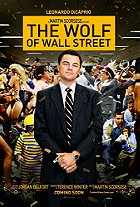
It really is 'the Goodfellas of 2010s' but BETTER!
 Posted : 11 years, 7 months ago on 7 July 2014 04:52
(A review of The Wolf of Wall Street)
Posted : 11 years, 7 months ago on 7 July 2014 04:52
(A review of The Wolf of Wall Street)To an extent, The Wolf Of Wall Street is like an experiment on part of director Martin Scorsese. Throughout his career, he has been known for some of the most notorious gangster and crime films in Hollywood and his past two projects Shutter Island and Hugo had been out of left field from his past auteurist techniques. The Wolf Of Wall Street marks the return of Scorsese and cast members embarking into a gangster-like underworld with prospects of criminals, money and drugs whilst simultaneously attempting to live a life outside of it. In that sense, The Wolf Of Wall Street is a bit like Goodfellas all over again but in a more contemporary visual style. It tells the true story of Jordan Belfort, a stock broker who rises through corruption, money, drugs and sex which consequently leads to his fall. Just by that short synopsis, it is certainly a story that Scorsese would be able to pull off seeing as it’s identical to Goodfellas. The Wolf Of Wall Street is another superb Scorsese triumph and proves that he can still at over 70 years old re-create his trademark style of the crime genre.
In terms of The Wolf Of Wall Street’s contents, it is filled with interesting concepts of filming techniques whilst also illustrating moments of shock and dark humour. In some ways, Scorsese has made this like a documentary with DiCaprio as Jordan being both a talking-head and utilising voice-over narration telling his story. These strategies worked because it is told from the perspective of specific individuals and Jordan is the central figure to the story. Furthermore, we have witnessed a range of films featuring shocking sex scenes and excessive use of strong language but not in a long time has there been one featuring more than in The Wolf Of Wall Street. This brings us to what the film provides on an emotional level as there are moments of pure hilarity. Black comedies featuring crime only intends to be funny with a certain sense of humour and jokes aren’t directly told in the plot like in traditional comedies. To an extent, this coincides with humour from films by the Coen Brothers and Quentin Tarantino.
The Wolf Of Wall Street sees Leonardo DiCaprio collaborate with Martin Scorsese for the fifth time. Their previous works together have seen a wider ensemble cast with highly developed supporting characters becoming almost like shared leading roles with DiCaprio, but The Wolf Of Wall Street is his film alone. He absolutely shines as Jordan Belfort with a performance that could possibly be his most complete to date. In this role, he presents pure charisma that sealed his place as a Hollywood star back in the mid-1990s. This is particularly due to Jordan’s charms and intelligence among peers and to the audience. On the other hand, his age catches up with the character he is playing as he becomes the leading, independent businessman and crook whilst we progressively follow Jordan down his destructive path from rise to fall, similar to Henry Hill in Goodfellas.
Furthermore, Jonah Hill has been an actor who, judging from his previous Oscar-nominated performance in Moneyball, does have a talent outside of the traditional overweight, geeky and rather idiotic stereotype that he’s usually been portraying. Whilst that character type is featured in The Wolf Of Wall Street, Hill’s performance as Donnie Azoff matches with the film’s dark humour and deserved to get his second Oscar nomination. Newcomer Margot Robbie also made her presence known in Scorsese’s latest in the role of Naomi Lapaglia/Belfort as her performance is nothing short of sexy yet emotional. It wasn’t the career breakthrough as we have seen in the past but we could see that of her in future performance, and her role in The Wolf Of Wall Street has shown she is capable.
Running at 180 minutes, The Wolf Of Wall Street may seem like a very slowly paced and stretchy film which it is slightly within the film's final 15-20 minutes but from the beginning, you are hooked and through narrative time, will be drawn in Jordan’s path of money, drugs and sex to his downfall. It is probably Scorsese’s longest film but has certainly cited itself as a reminder that the legendary director hasn’t gone weary over time with his trademark genre. The Wolf Of Wall Street may shock viewers with his explicit use of sexual activity, innuendos, drug use and language but it goes beyond the extreme by making it funny to which Scorsese impressively pulled off. Scorsese is still a sublime director and whatever feature he brings next will be another with exciting and high expectations.
In terms of The Wolf Of Wall Street’s contents, it is filled with interesting concepts of filming techniques whilst also illustrating moments of shock and dark humour. In some ways, Scorsese has made this like a documentary with DiCaprio as Jordan being both a talking-head and utilising voice-over narration telling his story. These strategies worked because it is told from the perspective of specific individuals and Jordan is the central figure to the story. Furthermore, we have witnessed a range of films featuring shocking sex scenes and excessive use of strong language but not in a long time has there been one featuring more than in The Wolf Of Wall Street. This brings us to what the film provides on an emotional level as there are moments of pure hilarity. Black comedies featuring crime only intends to be funny with a certain sense of humour and jokes aren’t directly told in the plot like in traditional comedies. To an extent, this coincides with humour from films by the Coen Brothers and Quentin Tarantino.
The Wolf Of Wall Street sees Leonardo DiCaprio collaborate with Martin Scorsese for the fifth time. Their previous works together have seen a wider ensemble cast with highly developed supporting characters becoming almost like shared leading roles with DiCaprio, but The Wolf Of Wall Street is his film alone. He absolutely shines as Jordan Belfort with a performance that could possibly be his most complete to date. In this role, he presents pure charisma that sealed his place as a Hollywood star back in the mid-1990s. This is particularly due to Jordan’s charms and intelligence among peers and to the audience. On the other hand, his age catches up with the character he is playing as he becomes the leading, independent businessman and crook whilst we progressively follow Jordan down his destructive path from rise to fall, similar to Henry Hill in Goodfellas.
Furthermore, Jonah Hill has been an actor who, judging from his previous Oscar-nominated performance in Moneyball, does have a talent outside of the traditional overweight, geeky and rather idiotic stereotype that he’s usually been portraying. Whilst that character type is featured in The Wolf Of Wall Street, Hill’s performance as Donnie Azoff matches with the film’s dark humour and deserved to get his second Oscar nomination. Newcomer Margot Robbie also made her presence known in Scorsese’s latest in the role of Naomi Lapaglia/Belfort as her performance is nothing short of sexy yet emotional. It wasn’t the career breakthrough as we have seen in the past but we could see that of her in future performance, and her role in The Wolf Of Wall Street has shown she is capable.
Running at 180 minutes, The Wolf Of Wall Street may seem like a very slowly paced and stretchy film which it is slightly within the film's final 15-20 minutes but from the beginning, you are hooked and through narrative time, will be drawn in Jordan’s path of money, drugs and sex to his downfall. It is probably Scorsese’s longest film but has certainly cited itself as a reminder that the legendary director hasn’t gone weary over time with his trademark genre. The Wolf Of Wall Street may shock viewers with his explicit use of sexual activity, innuendos, drug use and language but it goes beyond the extreme by making it funny to which Scorsese impressively pulled off. Scorsese is still a sublime director and whatever feature he brings next will be another with exciting and high expectations.
0 comments, Reply to this entry